Deep-Tech Powder Engineering · Magdeburg
The powders others can't make.
Micro and nano grinding, particle coating and customised mills – for materials that standard processes cannot handle. Without cryogenic milling.
Spin-off of OVGU Magdeburg · since 2021
- 3.0 µm
- finest documented d50, volume-weighted
- 311
- verified measurements on polymers
- 16
- material classes with documented results
- 13
- documented coating combinations
You have a material that will not grind.
Soft, fibrous, tough, temperature-sensitive, sticky. The contract grinder declines. The equipment supplier sells you a standard mill that cannot do it. Cryogenic milling gets expensive – and still yields too little material in the wrong fraction.
That is exactly where our projects begin.
Micro & Nano Grinding
We grind what standard mills cannot – down to the micro and nano range, without liquid nitrogen. Seven polymers and nine further material classes are documented with measurement data.
Particle Coating
We mechanically embed fine particles into the surface of larger particles and granulates – without heat input, without binders, continuously instead of in batches.
Customized Mills
Once the process works, we build the mill at your site – including process know-how and a licence to produce the material.
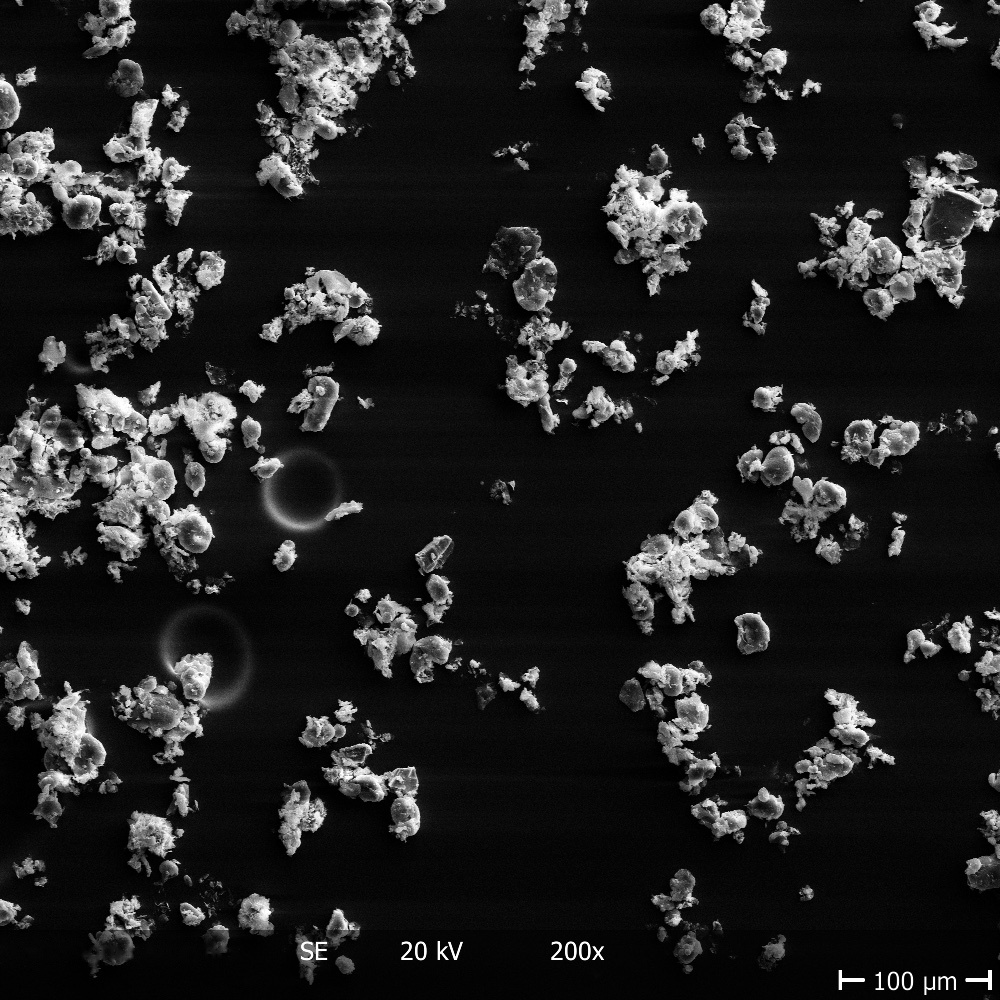
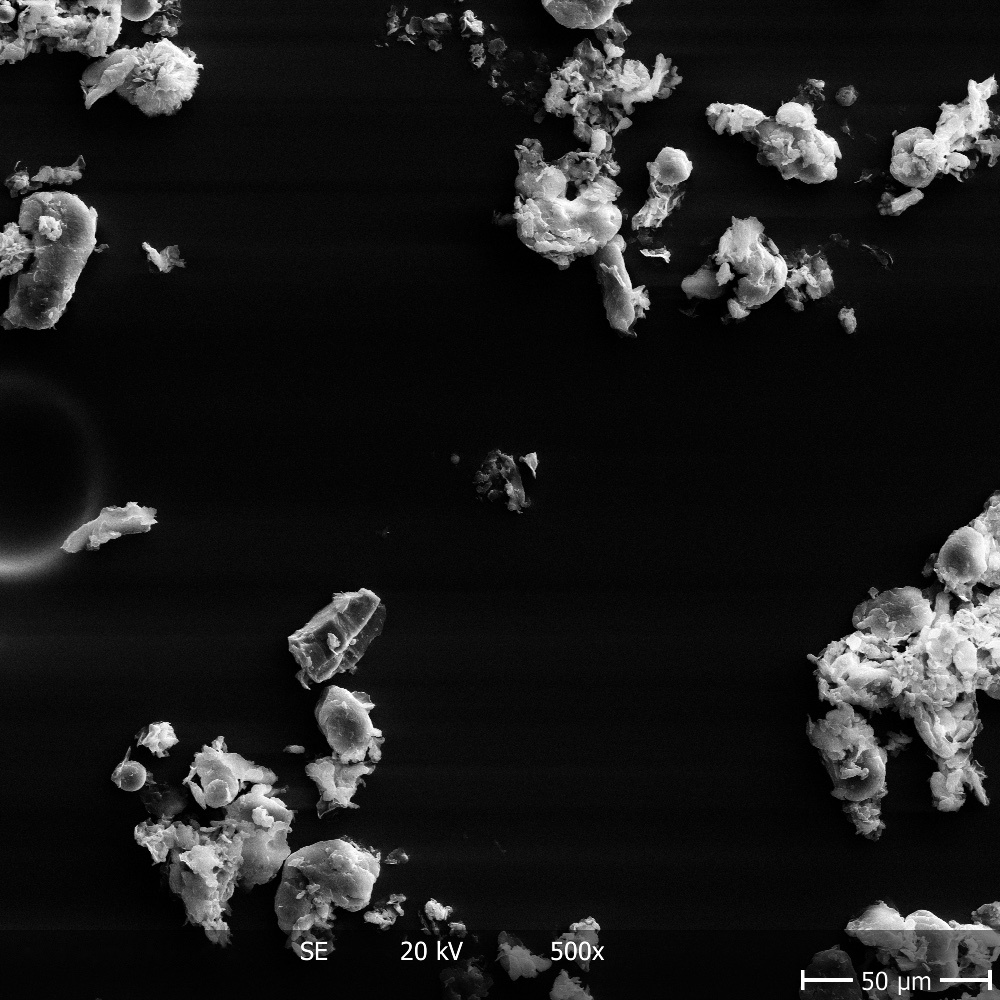
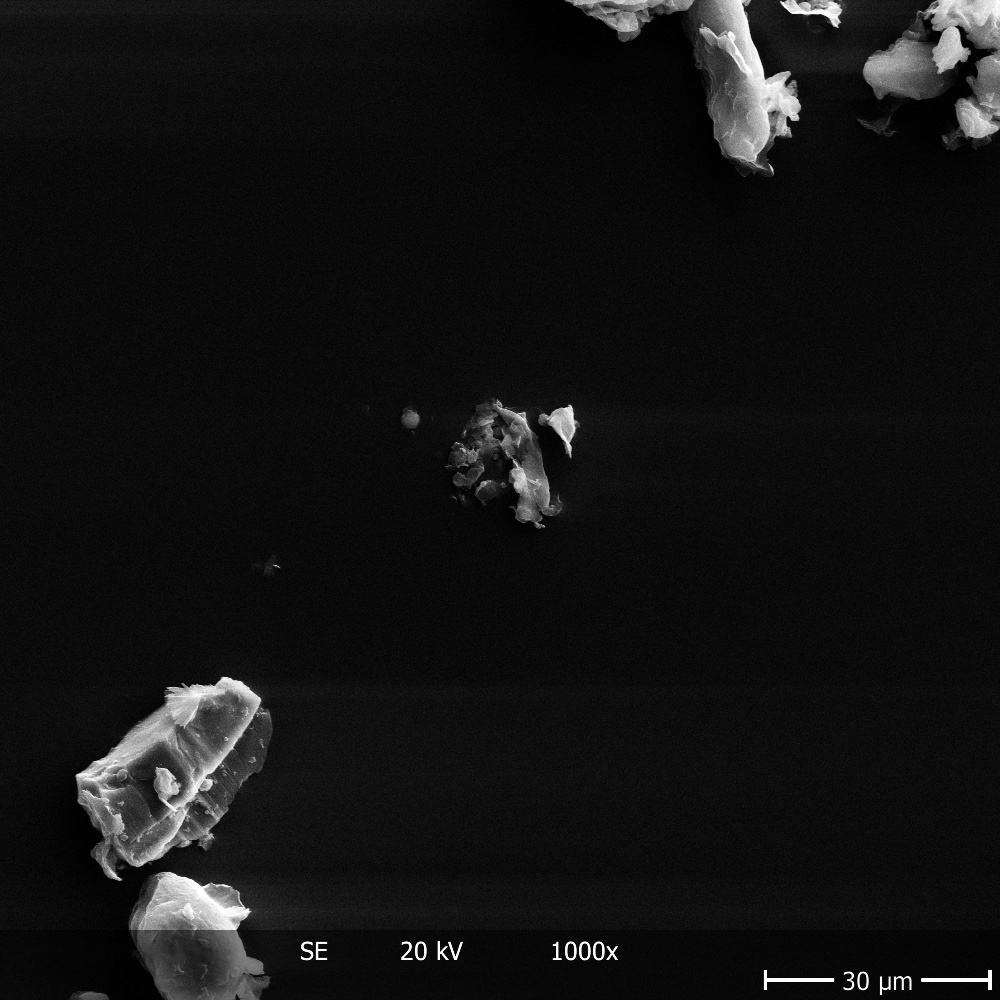
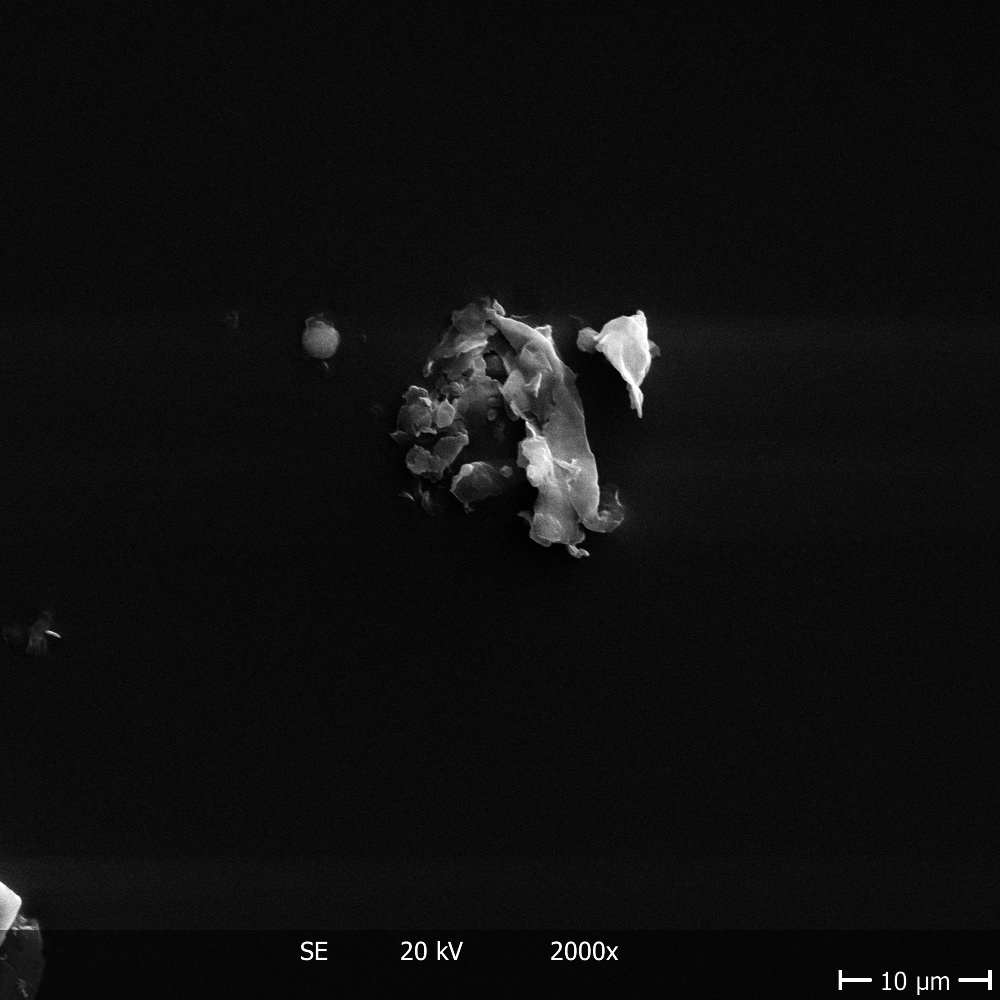
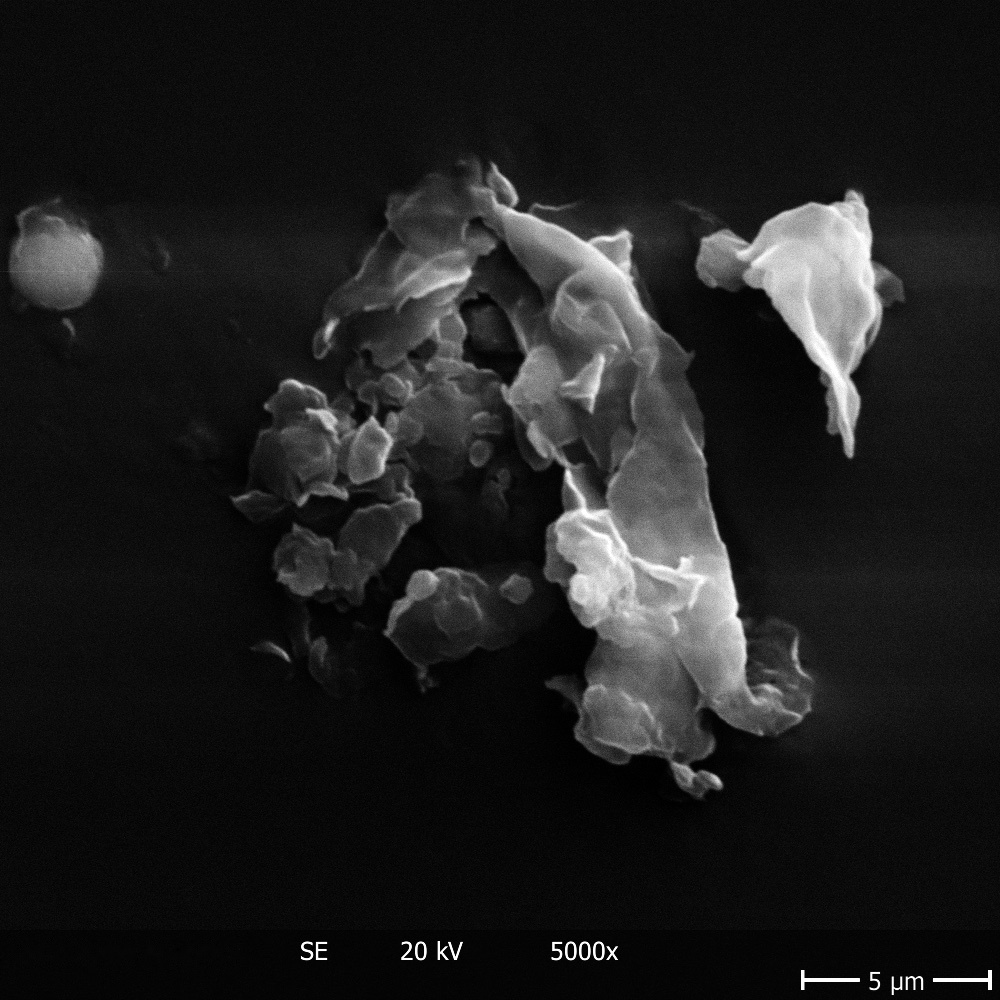
The same sample at five magnifications — not a zoom into a single particle.
200 ×, Scale bar 100 µmUnder the electron microscope
What grinding actually means
What is a single number on a data sheet is here a field of particles: irregularly shaped, of many sizes side by side, as fragmentation actually produces them. The scale bar is recalculated at every step.
How the process worksReference materials · Secondary microplastics
Secondary microplastics – from your polymer, not from a catalogue.
Order microplastic reference material from a catalogue and you get the supplier's polymer – their batch, their additive package, their state of ageing. For method validation and interlaboratory studies that is often the wrong material.
We mill your own polymer into secondary microplastics – at gram scale, with a measurement report.
| Route | Source material | Typical batch size | Particle-level characterisation |
|---|---|---|---|
| Catalogue reference material | Supplier's own polymer stock | Milligrams to a few grams | Data sheet for the catalogue product |
| Cryogenic toll milling | Your material | typically from several hundred kilograms | usually not part of the service |
| NanoFract | Your polymer | from gram scale upwards | Measurement report per batch, distribution type stated |
What we have already ground
Indicative volume-weighted d50 values from completed projects. For every batch we issue a measurement report with d10, d50, d90 and the distribution type stated.
Polymers – secondary microplastics
d50 range
Other material classes
Achieved d50
* number-weighted distribution, not volume-weighted like the other values.
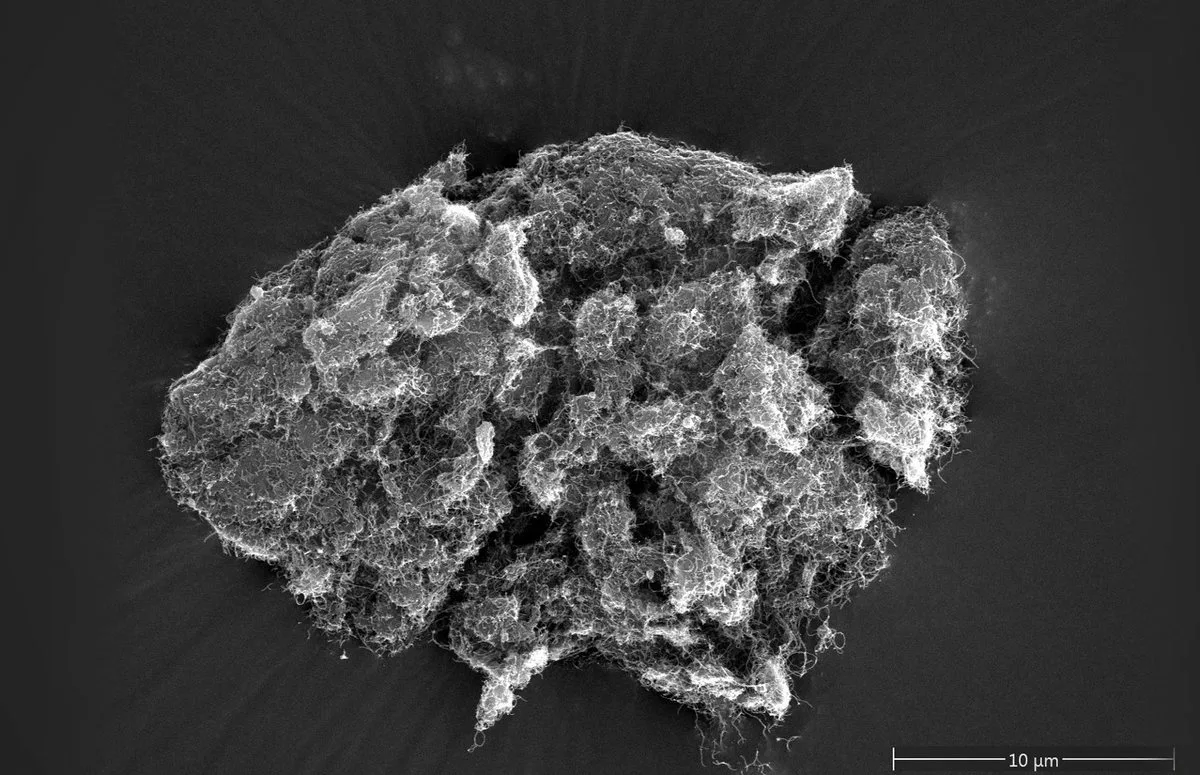
Particle coating
This is what a coated particle looks like
Aluminium particle mechanically coated with carbon nanotubes. The nanotubes sit individually on the surface rather than as an agglomerate. Scale bar: 10 µm.
All documented combinationsFrom sample to series
Enquiry
Material, target size, quantity, application. Under NDA if you prefer.
Trial grind
We grind and deliver a measurement report stating the distribution type.
Process development
Reproducible process window for your target specification.
Small series
First quantities for your validation, from our production.
Programme or plant
Recurring supply – or your own mill on site under licence.
Our data, no form required
Both data sheets are available without registration. The downloads page additionally holds the whitepaper on the regulatory framework and the distribution trap in d50 figures.
Material data sheet 01 – Grinding capabilities
Seven polymers, nine further material classes, 311 verified measurements.
Material data sheet 02 – Particle coating
Thirteen documented carrier/layer combinations and their effects.
Partners, customers and network
NanoFract is a spin-off of Otto von Guericke University Magdeburg.